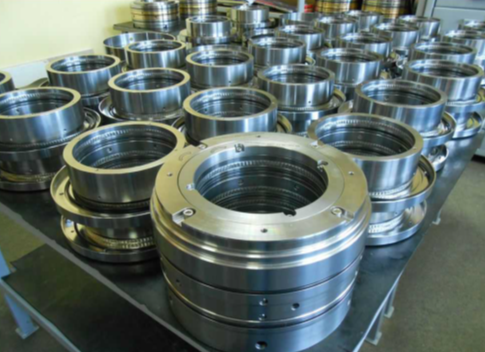
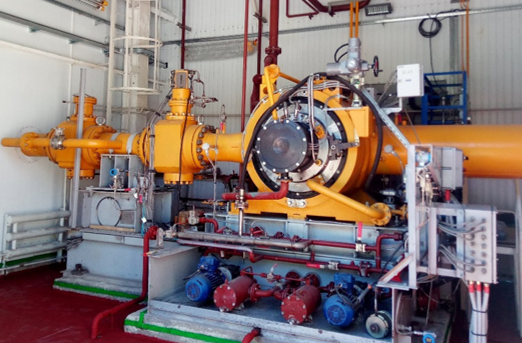
Dry gas seal systems (DGS) are the most effective solution for turbomachinery shaft sealing.
Dry gas seal systems are the most advanced seals for turbomachinery shafts. Dry gas seal systems can be used on virtually any equipment where there is a need to seal rotating shafts.
DGS are used due to a number of economic and environmental advantages in comparison with traditional shaft end seal systems:
- elimination of oil losses ablating to the flow range;
- elimination of losses associated with unusable oil replacement;
- reduction of working gas losses by ten folds due to oil discharge cut-off from oil traps and degassers;
- operating gas quality improvement by eliminating the oil content;
- no energy costs for the operation of seal oil pumps;
- no energy costs for oil degassing;
- reduction of sealing system maintenance time losses;
- reduction of standard and above-standard emission fees;
- reduction of losses from excess energy and gas consumption during unscheduled shutdowns due to seal failures;
- improvement of environmental friendliness;
- improvement of operating conditions;
improvement of fire and explosion safety.
Specifications
- Sealing pressure – max. 250 kg/cm2 ;
- Seal area temperature – max. 250o С;
- Peripheral speed of rotating seat – max. 160 m/sec;
- Sealed shaft diameter – max. 300 mm.
If any of the specified parameters are exceeded, special (customized) seals can be used.
Maintenance benefits:
- no labor-intensive process of sealing oil system maintenance (oil replacement, repair of pumps and related equipment, the entire system inspection);
- dry gas seal maintenance includes: visual inspection of operating sealing steam, replacement of O-rings and dampers (once per 1…4 years), replacement of clogged filter elements, standard periodic calibration of instruments.